N.B.Coop News

Breaking, broken…Good, bad…Old, new…Global, national, local…Facts, figures, fantasies…Letters, notes, opinions…All the news fit / unfit to post, print, scatter… Norbert Blei – publisher & editor | Monsieur K. – managing editor

Page 6 of 7

happy valentine’s day from the ghost of gust klenke

Photo by Norbert Blei

HAPPY VALENTINE’S DAY

from

“THE GHOST OF GUST KLENKE”
by
Norbert Blei

The old, weather-beaten, white gas station with the red sign “GUS” KLENKE still stands on the corner in Ellison Bay, minus the red Standard gas pumps with the glass crowns, minus the old oval, orange 7-Up sign, minus ‘ the clock in the window, minus the Atlas tire sign, the Quaker State sign, the two Honey for Sale signs, the air hose, minus the sleeping dog in the doorway, minus Gust. (Thank God no one has dug out the lilac bushes yet.)

It’s become kind of a landmark these days. Though a landmark to or for what, leaves natives and tourists alike scratching their heads, babbling to themselves.

Natives and oldtimers will right away lapse into their own memories of Gust. A visitor or two might recall buying a jar of honey from the man, while others will recall the place simply because “it was always there.”

And there will be those who probably never stopped because it seemed a bit of a local blight in their eyes. Because it wasn’t one of those modern refilling unservice station/mini marts where well-dressed customer-attendants, without a speck of dirt under their fingernails, or a dab of grease on their pressed clothing, couldn’t tell you the difference between a sparkplug and a quart of 10W-30, let alone know how to change either.

But this old falling-down gas station with the old man and all the junk in the dark inside and car parts and tools and beehives and junk all over the place and fiddle hanging above the cash register and the stove smoking and the dog in a dead sleep against the wall and the blue neon clock glowing in the window all night long, and Gust bent over some engine with a wrench in his hand saying, “Yeeeeeeeeep,” and the derelict cars and the old schoolbus outside rusting in the weeds … all this was Gust Klenke, And Gust Klenke was all this.

And we need to be reminded of this occasionally, especially now as the county goes Condo and Cute, and before every vestige of the real Door County is homogenized in the humdrum of urban slick and country fake with shops called ‘The Maple Closet’ and ‘Heaven’s Gate’.

This photo of Gust was also taken by Norbert Blei –20 some years ago.)

So smile, tip your hat, say a little prayer, or toot your horn to the ghost of Gust when you pass by. His place had ‘character’ (still has, what’s left of it). Something almost impossible to find in most of Door these days, as we either tear it down, rehab it into something it never was, or build in the current vogue of Door County Country-Cute-Kitsch. All of which is false, all of which is phony. All of which makes about as much sense as Gust Klenke alive and well, driving a BMW and dressed like a yuppie.

There’s Door County Country-Cute-Kitsch and Door County character. And you don’t have to look too far down the block from Gust’s to separate the real from the unreal. The hustle from what-it-was-like-to-fix-machines-in-a-building-that-wasn’t-trying-to-be-anything-else-than-what-it-was-and-raise-bees-and-gather-and-sell-honey-to-folks-who-stopped-by-because-they-needed-you-and-so-what-if-the-whole-place-looked-like-it-was-going-to-hell, cause maybe it was, and maybe we all was, yeeeeeeep!”

Downtown Ellison Bay still seems a little purer, a little more authentic than what’s been happening in most of the towns and villages of Door these days. Late at night, I like to think of Gust in his dimly lit garage, wearing his grimy bibs, with tools and rags and pencils sticking out of his pockets, his old cap hugging his forehead, bent over, struggling to fix the carburetor on some small engine.

The blue neon clock glows in the window … he opens the door and steps outside, onto the gravel, the smell of raw grass and the scent of summer lilacs . . . and takes a little stroll toward the Viking for his usual cup of coffee.

The street is empty. The town is quiet. A potter has replaced the gallery across the street…the small building where the market once was. The post office is no longer in Walter Severson’s house, but the house still stands, and so too that beautiful white frame house of Clint Rogers and his wife … a family with some history to Ellison Bay.

Will’s Cottages remain the same, thank God or someone for that. The most authentic lodging to be had in Ellison Bay. Rustic and real. The Town Market too, is what it is. So too the Viking, where only a few of Gusts’ old cronies are to be found at the counter these days.

The Pioneer Store… the prize and pride of old Ellison Bay as Gust knew it… and as it still stands in all its glory and history, thanks to Lester and Carol Newman. (Measure any of your Country-Cute-Kitsch shops in Door alongside this one. You’ll recognize them real, real fast.)

No comment on the church across the street. Let that out-of-character design speak for itself. The Norrland looks great. So too Kenny Gobel’s station. Who can explain the Greek Parthenon of Ellison Bay that once wag Clayton’s? Till’s fits in perfectly. So too the abandoned, old Door Reminder… and all the rest down the road, and up the hill, all a little beyond an old soul’s nightly sojourn.

Heading back to his garage, a flashlight in hand, his dog at his heels, the ghost of Gust thinks the old town “ain’t so bad yet, but sure is changing.” He wishes whoever took the blue neon clock from the window of his garage would put it back, leave it there for the local folks, the travelers, the world of Ellison Bay and beyond to keep time by.

That would be a nice-enough memorial, a remem¬brance of old Gust. Leave the station stand till it falls. And leave the light of the clock glowing in the window for all a them that needs to be reminded that time passes for everything and everyone. Though the memory of the real, like Gust Klenke, has a life of its own. Yeeeeeeeeeeeep.

[from CHRONICLES OF A RURAL JOURNALIST IN AMERICA, Norbert Blei, Samizdat Press, 1990 ]

Woodcut by Louis Smolak

february notes

Photo by Norbert Blei

Ice Shanty

February 3

Walking the sharp afternoon, an hour or so before sunset, the light already cutting the trees in darkness halfway down the trunks, the face and the ears catching the slight but bitter wind while passing the open fields. Down to the lake, covered now with snow . . . and in the distance, four ice shanties. Smoke rolls upwards from the tiny chimneys and spreads in the late light of sky. Inside, men sit around an open hole of blue, tied to the water under ice, lost in the oldest of prayers. Walking above it all, I see and feel and know the sweep and force of wet flesh stirring a muddy lake bottom that might possibly read spring to scale and fin and shell, though the clear and cloudy heaven I trod, to fish steering beneath me, remains a constancy, a limit to leaping, a ceiling of ice.

Frost Upon the Pane

February 7

Of nights, of winter, sometimes not made for sleep or dream. Night of anguish, of a restlessness, of wanting too hard to die the death of day. Struggling to reconstruct the silence, the meaninglessness of words. To stop the mind. To stop the mind. To worry the illusive patterns of frost upon the pane. To climb that slope, reach the apex which harbors moonlight, only to slide down again in milky darkness, eyes alive, body whole, mind afire.

Snow Play

February 16

Coming home last night through the fast falling snow: flakes growing in my eyes, the play of light on the road ahead. Landscape shifting as the road, the trees, the fences, farms and fields are transformed in a unison of white. The beams of the headlights, straight, in time appear to cross, appear to turn back upon themselves, back upon the driver, eyes dancing in a whirl of flakes so big they blind, then occupy the very eye till all inside the skull is a ball of glass turned upside down, snow drifting in its own light.

The White Peninsula

February 20

The silence of this life in the country night and day, in winter, becomes so common, so casual, that only the harshest, the most strident, the most unusual of noises awakens one from this comfortable lethargy. It is almost as if a balance of nature, sounds most natural, has been reached within the ear. Which is why early this morning, 6:30 a.m., the far away sound … a hum?…coming closer to where I lay in bed…closer…rivets my attention to the ceiling, then to the window, the sky. Suddenly the steady whirring sound passes overhead, diminishing once more. A single-engine plane, flying this bleak winter landscape unaccustomed to any air traffic at all. The mind goes up to it… the sound, the plane, the pilot. With him I see the white peninsula, the islands, the blue waters of the lake. On the ground, snowbirds… a harbinger of spring.

Photo by Norbert Blei

doorstepsfrom: DOOR STEPS, The Days, The seasons, Ellis Press, 1983, cover painting and text sketches by Charles Peterson, $15, hardbound. A year of daily notes and four essays chronicling the life of a writer adjusting to a rural landscape. Available from the publisher, Ellis Press; from the author at ngbleiATgmailDOTcom or in Door County at Main Street Market, Egg Harbor; The Pioneer Store, Ellison Bay; Passtimes Books, Sister Bay.

daniel anderson | remembering door in photographs

Daniel Anderson

Remembering Door in Photographs
by Norbert Blei

For those who still question whether photography is art, I suggest they visit the Miller Art Museum in Sturgeon Bay, Wisconsin and dwell on the exhibit “Barbara’s Farm: A Color Photography Memoir,” by Daniel Anderson, January 16 to March 2, 2010.

I doubt anyone can walk past the first few photographs without catching his breath. The sheer beauty of these large images (23×30 print, 32×40 frame) is staggering. You never stop to consider whether they are oil paintings, watercolors, pastels, etc. Instead, your eyes are immediately engaged, invited to inhabit the rural images Anderson has captured…holding you in their midst, be it “Pear Tree in Fog,” “Smoke House,” “Mountain Ash Berries and Wash House” or any of the other thirty-four works.

As Anderson sees it, “The question of whether photography is art or not is not one that I worry about at all. Photography has its own grammar and language that must be mastered as well as having its own history and traditions that must be respected. It shares with other forms of visual arts like painting and sculpture the fact that materials, tools and methods must be learned and practiced before one can adequately express oneself. If any form of visual communication is to be considered as art, it should exhibit some common characteristics such as conveying ideas, intelligence and an intent that is communicated.

”Here is why I consider what I do to be an art form: I create imagery to fulfill my personal creative vision. I always have a point of view and have an emotional connection with my subject and I use photography to express these emotions and ideas and communicate them to a viewer.”

Given his travels, the world-wide scope, interest, acquisition of his work, given his study under Ansel Adams and other masters, we sometimes forget that Dan Anderson, a fulltime resident here since 1991, while not an ‘official local’ has a long history with the Door County setting, going back to boyhood—which this exhibit certainly celebrates.

“Sixty years ago, I was growing up across the road from this farm and since it was the home of my boyhood friend Duane, I played in, on, and around these same buildings and trees for years. Duane’s sisters, Barbara, Sheila and Rose, were also part of the large Logerquist family. At that time, this farm was a very active one with dairy cattle, draft horses, chickens and general farming activities with busy workers using lots of equipment.

“It also had a cherry orchard, and this fact was the main motivating force behind this photo project as it was the four sheds built in the 1930’s to house the migrant workers for the time they were in Door County every summer harvesting the cherry crop that first attracted me as a photographer. All through the 1940’s and 1950’s Door County had many migrant workers housed in sheds on many orchards and farms. These folks made the county a very exotic place to grow up for me. Since I picked cherries right along with them I became acquainted with many of them over the years.

“These iconic migrant sheds have seen an incredibly rich history, housing workers from many places in the world. There have been Native Americans, workers from the Caribbean, African Americans from the south, Hispanic Americans from Texas, Caucasians from the Appalachian mountain regions and other southern states. They all would come to Door County for the cherry harvest season in late July and August during their itinerant life following and harvesting the crops throughout the United States. During the latter years of World War II, German POW’s were brought from a Wisconsin POW camp to the Logerquist farm to pick cherries and were housed in these sheds during the cherry harvest. Today, time has taken a hard toll on the migrant housing structures throughout the county, and now these four sheds are some of the last and best examples of them still standing.

“My memory of these buildings and landscape reminds me that they are remarkably unchanged in the last 60 years that I have been acquainted with them. … Yes, there have been great changes in the life and activities of this farm. The cherry orchard is long gone … The dairy cattle operation and general farming activities have ceased and of course the migrant workers whose presence was such a fascinating part of every summer to me while I was growing up have been gone from these sheds and indeed from the entire county for decades now. But the bones of my memories, the buildings and trees, are still here … Today, only Barbara still lives on the farm and she has faithfully seen to the maintenance and upkeep of her farm.

“Now decades later I again live within a few miles from the farm with access to it as a photographer and so see it with a different mindset than I did as a boy but those boyhood memories are still filtering the way I think about and compose these images. There are iconic structures and trees that appeal to me as a photographer … Now after almost three years and many visits to Barbara’s Farm this project does feel finished to me.”

Those familiar with Anderson’s education and work often associate his photography with the stunning, stark contrast of his nature prints, that intense reality of black and white. Anderson admits these days to loving color as well. In his early days, however, the technology for color was not that advanced. “I could not control the color then. While I could be way more creative in black and white.” He is truly a master of both.

Though I have lived and written about this county for many years and often work with artists Charles Peterson and Emmett Johns on my own books and publications, three years ago I had the opportunity to work with Dan Anderson for the first time on a book project. In 2006, Cross+Roads Press published, *THE NATURE OF DOOR, Door County Writers and Artists on Preservation of Place, Edited by Norbert Blei and Karen Yancey, for the Door County Land Trust. A truly beautiful book I am most proud of, featuring many of our fine local writers on particular places worth preserving in this county. Required reading–and owning. The text is handsomely illustrated/enhanced with sketches and drawings from the incredible sketch books of Charles Peterson. The book is available locally in various and through the Door County Land Trust website.

For the front and back covers of this book, I called upon photographer Dan Anderson in his beautiful Ellison Bay studio, requesting two extraordinary black and white photographs of his, which I felt perfectly set the tone of the book, `showed’ what needed to be said starkly, simply, beautifully: Here it is. This must be honored and preserved for us all.

I am beyond fortunate to be living and working in this environment, surrounded by all this natural wonder…in the midst of such generous artists and good people.

Anderson’s latest work is a confirmation of what makes this place. What matters here.

TWO FINAL NOTES:

Daniel Anderson will give a talk about his show at the Miller Art Museum in Sturgeon Bay, Wisconsin on February 11 at 10:30 A.M.

The sponsors of this exhibit are Keith and Claudia Kasen, Norma and John Green, and Gretchen and John Maring. These are all fine people. Sponsors of the arts in Door County never get the attention or credit they deserve. I thank you. We thank these folks in particular for sponsoring this stunning show of Dan Anderson’s photographs.

hill 17

You had to live here to know about it. Hear someone mention it in conversation. It had nothing to do with summer vacations in Door County. It was invisible spring, summer, and fall when it faded into the natural landscape as the 17th fairway of the golf course that was set so perfectly in one of Wisconsin’s most beautiful state parks: Peninsula Park, Door County—between Fish Creek and Ephraim.

The transformation and challenge came in winter. White on gray. Deep snow. Long winters of no end. What to do come another weekend in cold storage? Ice skate? Ice fish? Cross-country ski?

Hill 17.

The hill seemed much higher then, forty years again when the kids were small and a friend in Ephraim mentioned it was a good place to take the kids in winter.

I recall a recent L.L. Bean winter catalog, “Outdoors” and can’t believe the stuff available: “Bean’s Kids Winter Walker Snowshoes ($49.99); Tubbs Flex Snowshoes ($179); Bean’s Toboggan ($99 to $149); Sonic Snow Tube ($89 to $129); Bean’s Flyer Sleds by Flexible Flyer ($28.95 to $32.95); Flexible Flyer Runner Sled ($79 to $99); Flexible Flyer Saucer ($28.95); Snow Castle/Snowball Maker Set ($29.95)…helmets, goggles, sunglasses, Bean canteens…

It also seemed (and was) more ‘dangerous’ in the past. More like old-time sports for kids—mostly unsupervised by parents or anyone else. You found a rise in the landscape something like a hill covered in ice or/and snow—and you went at it. Gave no mind to cold. Numbness. Frozen hands, feet, face. You made fun. Sport. Took chances. The bigger the hill the better. You slid down on a small wooden sled that didn’t steer too well…or a red-rubber-patched, black inner tube, a piece of cardboard, or the seat of your pants. Maybe an old pair of wooden skis hand-made by your friend’s Swedish grandfather. Or if you were really lucky, a toboggan that everyone could pile onto and yell all the way down.

Nothing else to do when you came to rest at the bottom, (and hopefully turned over ) but get up, dust yourself off, and climb to the top of Hill 17 again…and again… It never got old. Sometimes a parent or someone handed you a cup of sweet hot cocoa from a thermos–which made the day even tastier.

I look upon the scene today, alone, from the bottom of the hill: “No Sledding” a sign says, “Due to icy conditions.” Quiet. Not a soul in sight. A classic white-on-gray Door winter’s day…as they once were. And remain.

I take a last look up into the stillness, hold it for keepsakes…till the hill begins to fade into a Charles (Chick) Peterson painting—the ghosts of kids bundled in winter jackets, caps, scarves, gloves. Their bright color, the only color in the landscape. The sight of Ephraim across the frozen bay. The sound of voices laughing, screaming up and down the hill.

The warmth of winter.

Painting by Charles L. Perterson. You can visit the artist on his web site by clicking here… or just click the above painting please!

connecting from the rural world

Connecting from the Rural World

(That was then, this is now)

When I left the city for life in the rural, back in the late 1960’s, I found myself ‘north’ at almost the tip of a long peninsula, on a dead-end road with two neighbors: an old man who lived alone on a back forty adjacent to me (a stone fence separating us) and beyond him, across the road, an elderly couple. All of whom, in time, became good friends.

My connection to the outer world was a cranky four-party line. The three of us on this road—and somebody else, I was never sure who, or forgot …some old lady who never had much to say anyway, on another road nearby.

Sometimes the phone rang—and we all answered. Sometimes you wanted to use the phone, but couldn’t because one of the neighbors was on talking about snow or rain or church—or you.

Occasionally you picked it up just for the hell of it—just to know that another human being was out there, dead end road or not.

And sometimes, indeed, you listened in. But not long! Your conscience always got the better part of you. And you did not want someone saying: “Is that you_____? Are you listening in? Shame on you! Hang up!”

The four-partyline yielded in time to a single, “private” phone connection. Oh, joy, oh joy! All mine. I can pick up the phone any time of the day or night. Dial out! Make a connection to my folks back in Chicago. Friends everywhere.

In time, however, an isolation factor entered in. You missed the close connection to neighbors. Their voices. Their being right there…here.

I think the next miracle was the portable phone. You could actually take the damn phone outdoors where you were planting in the garden or having a beer at the picnic table under the tree and make a call to someone! Or take one. “Hey, I’m outside, talking to you! Yes, the weather’s fine. I’m going up on the roof now to clean the gutters—and taking you with me!”

Let’s make this fast—and simple: Enter the heavy portable car phone, the computer, car phone, laptop, cable, cell phone, i-phone… wireless….where are you? We?

Well, I’m still out here in the woods, the rural. Trying to make whatever connection I can. Cable doesn’t come this far—and probably never will, in my lifetime. Which is fine. I don’t need or want a 125 television channels. Sometimes deprivation is good for the soul

But I do need to stay connected. Miracle of miracles, not long ago, I was able to finally disconnect from the damned dogged land connection and go wireless! (Enter oh Brave New World—WELCOME!)

Mostly, I’m OK with everything. And sometimes slightly amused, especially in tourist-time summer, when ‘city folks’ enter my rural domain for a spell—some frustrated with laptops that can’t find a signal, some cursing into i-phones that don’t connect particularly well in these parts—the AT&T connection, haphazard, problematic at best.

Which bring me to the theme of this whole piece, this photograph, this scene not too far from me where someone, some frustrated tourist perhaps, threw down his marker…discovered a ‘hot spot’, put up a bench under the tree, a sign to alert the world:

I AM HERE! I AM CONNECTED EVEN FROM THIS DEAD-END-LOCATION! HEAR ME OUT NOW, WORLD!

norbert blei

greeting the seasons

Greeting the Seasons
from my coop-window

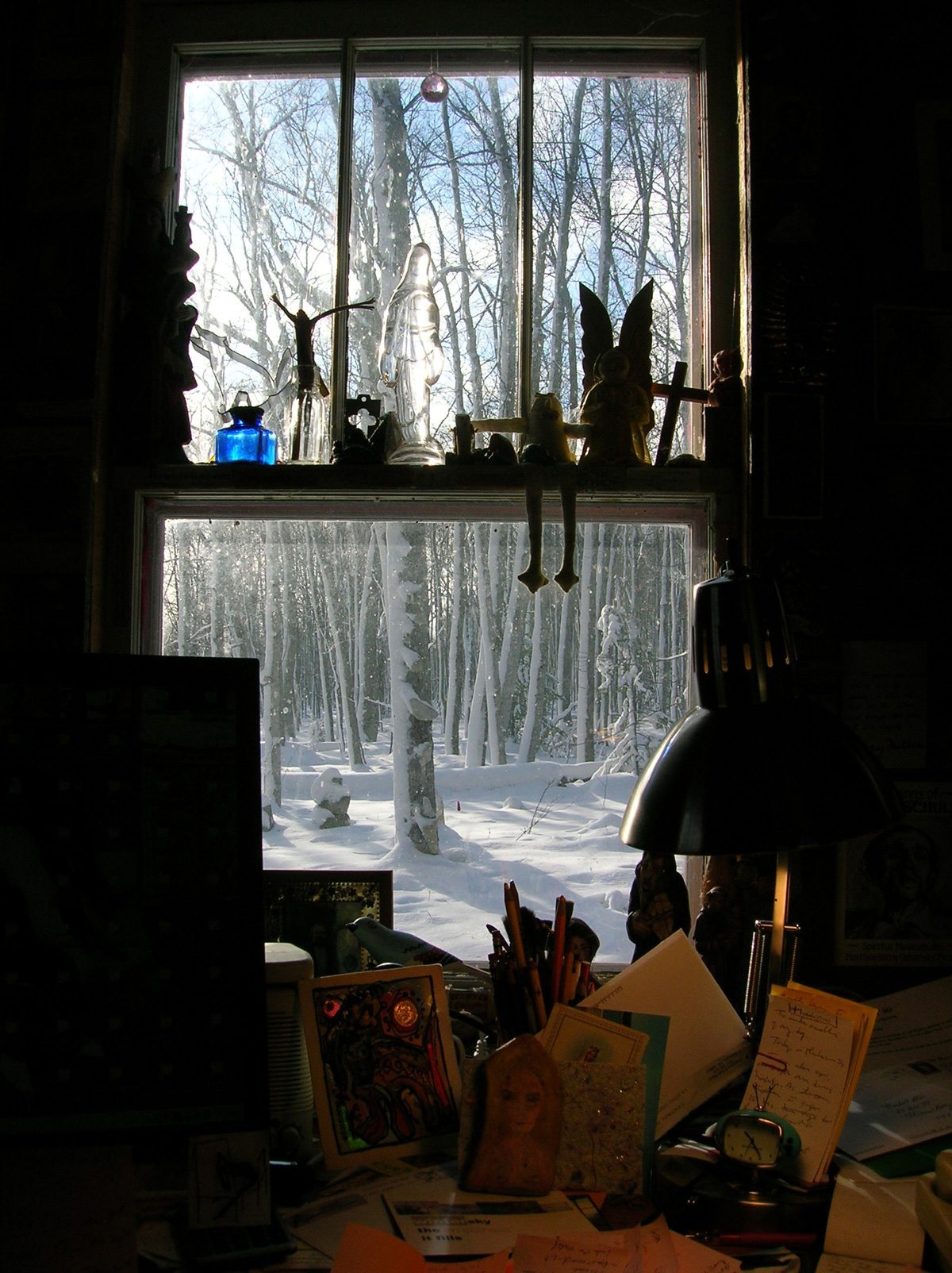
This is my view every day, sometimes nights—a room with a view for all seasons. Each one, a greeting, an invitation to behold.

I can’t wait to look out from my desk every day.

Looking out, looking in. Making something of it…out there…in here…in words. Some words finding their way to you—everywhere. From me in Ellison Bay to you—you over there in Afghanistan. Just a click away. Imagine.

The woods extend their ominous presence, their shadow, comfort, light. The snow is a constant revelation, an unspoken prayer. Birds, animals, rain, thunder, lighting, wind…the harvest moon snagged in the branches of an old maple tree. The lake waters, somber, sparkling—just down the road from here.

I’ve been looking out at the world through this window since1976. Everyday, something else I didn’t see before.

My thoughts today are with you all out there in this season of light, another new beginning. I give thanks for the gift of knowing you—you on the other side of my window. norbert blei

winter re-visited

WINTER RE-VISITED

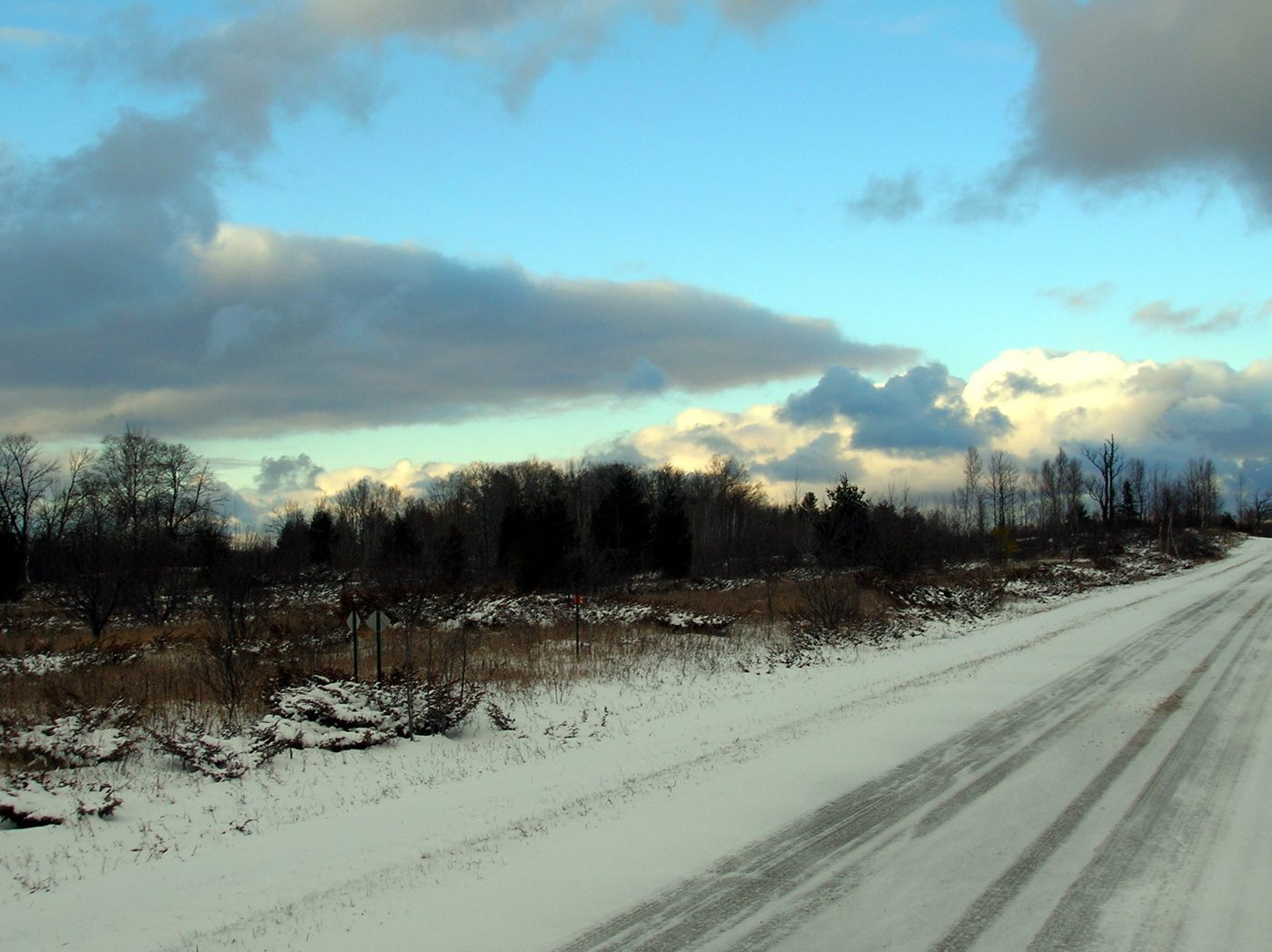
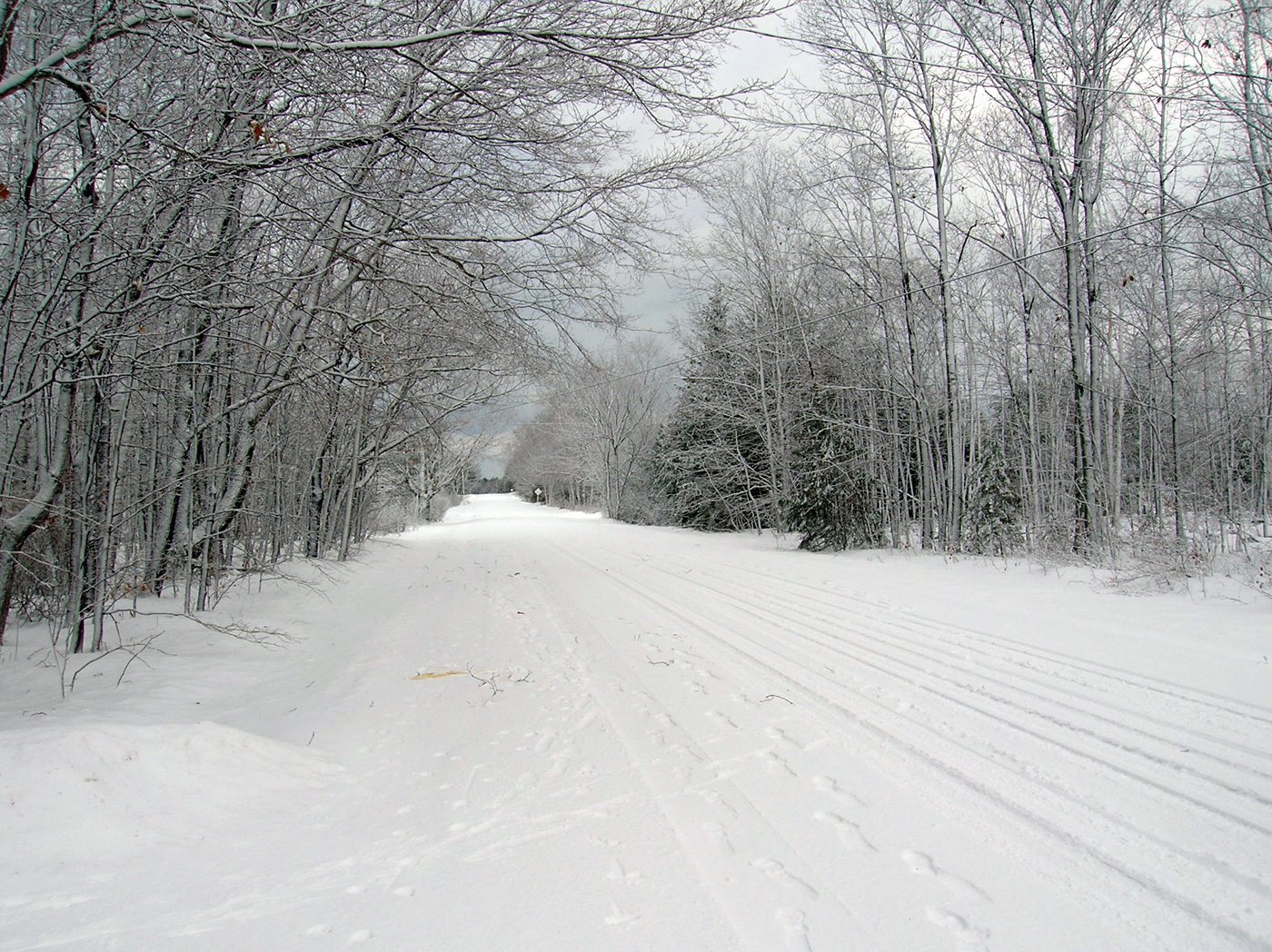
Road

The road that is ice leads to the water. Which is ice. Leads past the bedroom of the house where the old woman died in her sleep, her spine fused till she was something translucent, cold. Ice itself. Like a similar road which leads past the house where the wife, recently separated, sits alone in the kitchen loving the man still, listening for the sound of his truck, the bark of the dog, on the frozen drive. The same icy road that cuts across the fields. That cuts through the woods. That leads to the weathered house on the edge of the frozen lake where the road ends, where the old couple, partly blind, partly deaf, glide past each other like solitary skaters.
Is this frost on the windowpane? What is she saying?
Can you see my breath?
Where did she put the matches? It snows all night.
Nobody remembers this road anymore.

Windowpane

He is outside himself again. Running errands for bread and milk, morning mail, and occasional visits with the lonely, the desperate, the dying.
Isolation, illness, death make him come alive again.
The view is white. The long shadows of trees in a late afternoon sun the color of a lemon dropped in snow.
He inhabits the talk of neighbors, strangers, friends, loved ones. The talk of radio announcers and television news commentators. The world is invisible;
violence visible as love.
“Taste this,” he tells a loved one, disenchanted in his dreams.
To open the door inside again he needs magic, not the magician . . . the top hat, the black cape, the wand. Not the language of abracadabra.
To see behind mirrors through glass again. To pick slivers out of the palm of his hand. To rub the bark of birch. To root the fields and find the bird just before song and substantiate the night.
To see in the dark.
Suffer blinding light.
Touch, touch, touch the frosted glass to tears.

Love Untold in Two Landscapes

The world no longer exists for the middle-aged.

Not a story but a life.

He remembers walking over the burnt landscape. The canyon. The ravens. Making love, her head hanging over the edge.

He remembers walking over the white landscape. The bluff. The gulls. Making love, her head hanging over the frozen shore of the lake.

She wanted to meet him for a long time. Tell him I’m here, she tells herself. He knows.

People do not know how he hides in landscapes. Protective coloring.

He should tell her: Life is erotic. Or nothing. She should tell him: Your life belongs to something else.
Not me.

Unclothed, she almost makes him seem young again, though he, engaged in entering her, ravens circling above, stares over her hanging head, deep into the bottom of the canyon, part sun, part shade, part echo of a scream.

He and she bare to the middle movable parts, in the middle of their years, he makes her seem young again, though she, riding him, gulls pulling down the horizon, stares over his hanging head, mouth silently agape, tasting snow, tasting her come forward, sensing that ancient darkness before love, blue sky below.

Death and memory.

She gets to the bottom of him, he gets to the spirit of her.

She takes him again on a mud floor, the smell of native incense burning.

He takes her again in a barn on a bed of hay, and the smell of apples in a wooden crate.

Feelings of youth.

He reminds her of the first bite into a hard apple. Of sweetness. Of apples rotting.

She reminds him of ex-lovers and spouses, lost children, lost landscapes, aging flesh.

“! wanted to see how far we both would go.”

“I wanted to remember where I’d been.”

Who leaves whom?

The last time he was left with: a pickup truck, $300 in the bank, and a shelf of old National Geographies.

She was left with nothing. Which adds up. He gathers wood.

She gathers pottery shards.

He kicks off a pair of frozen boots.

She lets slide a Spanish shawl from her shoulders.

In the end, almost, she retreats to the top of a mountain she is physically incapable of climbing.

He walks in fresh falling snow with his .22 along the edge of a deep woods. And enters.

She hates him. Follows the rim of the canyon home. And takes the life of the most playful kitten in the new litter, deliberately, accidentally.

A shot, unheard, in the winter woods.

The death of romance.

[from: WINTER BOOK, Norbert Blei, Ellis Press, 2002]

william h. olson

Requiem for an Island Poet:

William H. Olson

“A Man’s a Man for A’ That”

by
Norbert Blei

A price can mak a belted knight,
A marquise, duke, an’ a’ that;
But an honest man’s aboon his might,
Gude faith, he maunna fa’ that!
For a’ that, an’ a’ that,
Their dignities an’ a’ that,
The pith o’ sense, an’ pride o’ worth,
Are higher rank than a’ that.

Then let us pray that come it may,
(As come it will for a’ that,)
That Sense and Worth, o’er a’ the earth,
Shall bear the gree, an’ a’ that.
For a’ that, an’ a’ that,
That man to man, the world o’er,
Shall brithers be for a’ that.

–Robert Burns

For the local record, Bill Olson, the bard of Washington Island, died last week. I’m not sure anyone on the Island ever called him that, passionate as he was in words about the place, but to my way of thinking, my understanding of Bill’s writing and love of Robert Burns, there was definitely a bardic quality about him, including his admiration for Burns’ politics and writings…a cry for fairness …liberalism/socialism…the problems of class inequalities.

As local legend would have it (and ‘legend-making comes swiftly to the recently departed in a small town, not to mention a small Island of 600 some people)… word had it that Bill Olson was known to fly his flag upside down whenever he disagreed with the government. True or not— it seems an act in keeping with his Robert Burns’ temperament, worthy of remembering this Island bard’s love of country, sense of individualism.

He occasionally wrote for the small but noteworthy local newspaper, The Washington Island Observer. You can tell a local newspaper is still local and effective these days when it isn’t owned by the Gannett gang of corporate newsmongers hell-bent on destroying American journalism. I know Bill would agree with me on this, since we discussed the state of local journalism via e-mail and phone conversations on a number of occasions, including the sad state of our county rag, the Door County Advocate (-Gannett), reduced to little news of no distinction, ‘journalism’ below the reporting skills of a high school newspaper.

There was no better observer of Island news and ways than Bill Olson, who always had issues worth airing in print for the local reader, the common good. The problem with the small-town-Bill Olson-writers in our bigger world of greater concerns is that we too often take these local folks for granted. Or worse, for fools.

In 2007 Bill published a collection of his columns, PERSPECTIVES OF AN ISLAND CITIZEN, Washington Island-An Amazing Place, Jackson Harbor Press, $10.95) which had all the focus and common sense of local writing at its best. His columns covered everything from meetings on economic development to local musical talent, garbage, education, liberty, taxes, fire/rescue services, etc.…to thoughtful little personal essays like “Amazing?” that begins in self-humor and ends in a meditation on mazes:

Neighbors my be wondering why that crazy Olson is pushing his lawnmower in circles out in the middle of what used to be a pasture of his sheep. It’s amazing.

It’s a maze. My dictionary says a maze is “An intricate, usually confusing network of interconnecting pathways, as in a garden; a labyrinth.” Amaze and maze both come to us from he Middle English word “masen” which means bewildered.

So what’s all this to do with going around in circles in an old pasture? Am I bewildered? Perhaps, but the maze will eventually end at its center with Celtic cross about six feet tall.. Still confused? Aren’t we all? Isn’t life a sort of maze?

Two years ago a poet friend of mine was extolling the fascinating story of mazes/labyrinths. As I investigate further, I found that mazes are used by some Christian churches as prayer paths…Our own Island Stavkirke can be reached by one of two prayer paths which are one sort of labyrinth..

Bill was born in Portage, Wisconsin, 1930, graduated from Lawrence College, served in the US Army (Japan), taught English at Meiji Gakuin University in Tokyo where he married Haruko (Phoebe) Miyazaki. He did graduate work in Nashville and after thirty years in business, retired to a twenty-acre farm on Washington Island in 1989, where he tended to a small flock of sheep, studied Robert Burns, helped others, and established Jackson Harbor Press.

Bill was, by every meaning of the word a ‘good man.’ “Volunteer” was one of the things he did best. The Pottawatomie Lighthouse on Rock Island was a particular passion. He was the kind of person some don’t quite understand or even accept, yet confess “…but his heart is in the right place.”

The “right place” for Bill Olson’s heart was the Island and his love of writing. Which came as natural to him as breathing. I doubt Bill ever desired to become a great writer. He simply wanted to say what was on his mind; what he felt needed to be said. Sometimes suggest it in story, sometimes explain it in essay…sometimes sing it in Robert Burns-like rhyme:

What Do Islanders Do?

In summer visitors may frown
And ask the question of renown;
In winter when things settle down.
aaaaaaWhat do you do?
The jobs you’d find in any town
aaaaaYou’ll find here too.

We’ve stores for food and hardware too,
We’ve teachers, farmers and a few
Commercial fishermen, it’s true
aaaaaAnd many more
Who toil for needed revenue
aaaaaThis side of Door.

We’ve restaurants and building trades
And students working for good grades.
Then as the shorter daylight fades,
aaaaaThat’s when we’re blest
And leisure time our life pervades.
aaaaaWe live with zest.

Some love to ski cross country where
They breathe our clean crisp Island air,
While others fish thru ice and stare
aaaaaAt water clear.
Our many hunters bright orange wear
aaaaaAnd get their deer.

So ask no more what we will do
But rather if it is taboo
To simply rest and to renew
aaaaaAnd contemplate.
We’ll even write a poem or two
aaaaaTo demonstrate

[from NORTH OF DEATH’S DOOR, 1992, with illustrations by Phoebe Olson]

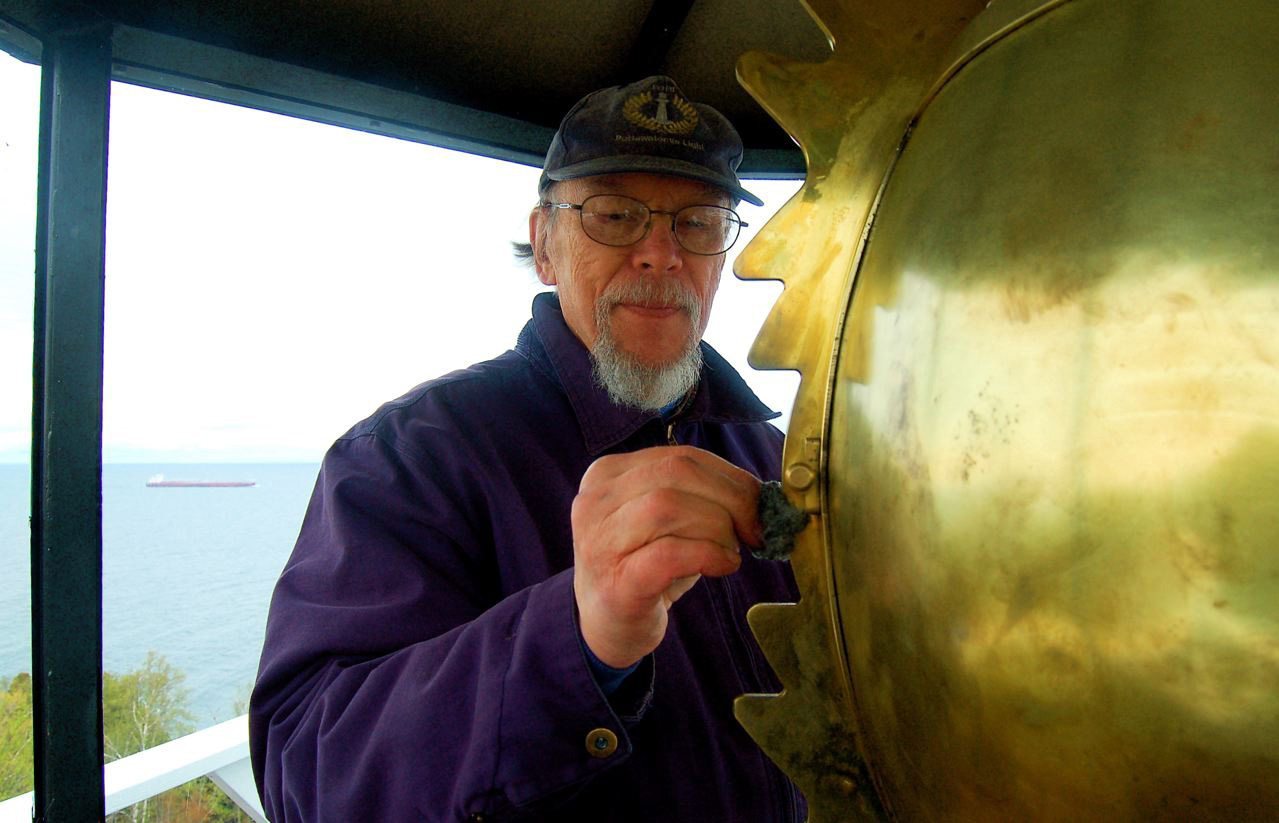
His son, Charles, sent me a photo of his father last week, “polishing the brass on the refurbished Rock Island light.”

That seems a perfect ending for this story:
Bill Olson, a keeper of the light.

the view (blocked) from the road (after & before)

THE VIEW (BLOCKED) FROM THE ROAD

(After & Before)
By
The Local Correspondent

You have to see it to believe it. Which is what this news item from NBCoop today is all about.

Many of us (residents and tourists alike) traveling south down Highway 42. see it all too often and are sick of the sight. What’s been pushed, ‘billboard-ed” in our face. What we’re forced to look at, when we know what once was there: another, potential, million-dollar view of the county. Now, alas, gone the way of condo craziness, developer’s desire: “Me first! Screw you! And Door County.”

It’s an old story. This is my 40th anniversary of living in the county and in all those years I’ve been watching it slowly picked apart. Gobbled up. “Disappeared.” Of course there’s no stopping it–except for certain individuals and organizations like the Door County Land Trust, with hearts and heads in the right place. Everything gets worse, as some sage once said. It does. Yes it does.

I addressed this issue before, almost two years ago, January, 2008 (see www.bleidoorcountytimes.com, “Blei/At Large”, check Archives, open “An Offering”). The view of Sister Bay I was defending (proposing…pleading for preservation) has by now been erased—replaced by the in-your-face reality in the accompanying photo—the continued “March of the Condos” across the Door landscape. Merrily We Roll Along. Well, maybe not so merrily in these economic times. And while many of them remain empty, I don’t see any of these selfish structures removed, the view restored ‘for the greater good.”

I could go into a long essay, a rabble-rousing rant—but what’s the use? I’ve devoted a considerable amount of my Door County writing to the issue. Even had some fun at it, and modicum of minor celebrity. But what’s the use? The condos keep marching toward the shoreline, the McMansions continue to secure, eat-up the rural interior (and wave banners “Don’t Tread on Me”). And a few of us are pleased with our view and four-car garage; some of us are pissed-off, remembering the way we were; and most of us don’t have time or care to think about it too much. It’s hard enough to pay the bills, find work.

I don’t know what Sister Bay/Liberty Grove was thinking when they allowed this to happen to the old Liberty Park Lodge and that beautiful shoreline. I don’t know the hieroglyphics of zoning or the skullduggery of local politics. But this seems to me a huge mistake. Another sad commentary on greed over the common good, the common view. CAUTION: There’s another foundation to the right of the present obstruction, which should pretty much shut the door in the face of everybody but the condo people..

They say a picture is worth a thousand words.

I’ve written only 483 of them.

Here’s the picture:

door county’s hidden past: people & places (the way it was/is)

Who Remembers…Smoked fish/chubs (smoked and sold) on the ferry dock at Gills Rock? the Brookside Tea Garden; Morris Larson’s Mobil Gas Station; the Choo Choo Restaurant; Cabin Craft—the first high-end gift ship?; Bill Beckstrom’s house, shop, herb garden; Doc Farmer; the Summertime Gift Shop; the first, last, short-lived Chinese Restaurant in Egg Harbor; the original `Rock’; the `original’ Whitefish Dunes/Bay; Sohns Market, Ephraim; Tony’s (first Italian restaurant, in the stone house on Hwy 42); the Barn; Beach Road Market; Happy Herman’s; Salty Joe’s; Pisha’s Restaurant; Don Hatch/furnace cleaning and repair; Gambles; Gibson’s; Sav-a-Buck; Prange’s; K-Mart; the Office; Walgreens; Steve Kastner’s Bike Shop & Health Foods, etc.; Winky’s Ski Hill; the Hotz boathouse and cabin, Europe Lake; FRESH EGGS FOR SALE/the sound of roosters crowing in the morning; Gordie Nelson’s dairy farm; Sedig’s Christmas wreath factory/barn, Ellison Bay; Gust Klenke; the Town Market (now William Caxton Books); Sid Telfer’s Orchard; Clayton’s Supper Club; the town dump; The Marco Polo Restaurant; snowmobile races at Newport; the Ellison Bay School House; Pa (Carl) Carlson (and brother John) Plumbing–& everything else that needs fixing at a fair price and an overwhelming neighborly-ness; the Door Reminder/Ellison Bay/John Kopitzke, ed.and pub.–“Let’s Chat”; the Bookmobile; dirt roads; Harvey `Sheriff’ Olson, fish broker; Al Johnson’s Restaurant–pre-goats (Eddie Valentine, Winky Larson, Bill Bastian, etc,; Bunda’s Department Store; blacksmiths: Ellison Bay/Sister Bay/Baileys Harbor; Chet Mann’s Bait Shop & rooms, Sister Bay; the old Door County Co-Op; Berns Lumberyard; Wes’ Barbershop/Irene’s Beauty Salon (across from Bunda’s); Emma Husby/the old Husby’s Bar (blue collar, local farmers; Bank of Sturgeon Bay (old building); Krist’s Red Owl; Henry Lang, fix-it-man; Howard Mann, fix-it-man; the bus/the bus stop(s); the Shell Gas Station, Sister Bay; the Indian statue/Murphy Park; Uncle Tom; Bahlert’s Store; the old Hotel Du Nord/Keyes Fletcher; Max Fletcher’s homemade helicopter; the old Lutheran Church/Sister Bay; Sister Bay Motors (& Wally Mickelson); Erickson Electric; migrant camps and pickers; Al Smith’s restaurant/Ephraim: Roen Orchards/Larson’s Orchards/Winky Larson; the Pink Landing; the Nor Dor Clinic/Doc Farmer; Wilke’s Furniture Store; the Anderson Hotel; Doc Sneeberger/Ephraim; Anchor Sam Subin; pottery by Kash Yamada; Doris White’s Gallery; Lhost’s Restaurant; Rudy’s Bakery; Andy Redmann’s Common House/Lake Cinema; Art Koser’s Gas Station/ Baileys Harbor; Chief Oshkosh; the Bible Camp; Paul’s Glass Bar; Emma Toft’s house/Toft’s Point; Narz’s art work/gallery in the schoolhouse, Fish Creek; Alibi Bar/Restaurant; Madeline Tourtelot/the Peninsula Art School; a three-party telephone line; plain old lighthouses (before they became tourist charms); whitefish livers; Dynamite Oldenburg and his Appaloosas; Millie Armato’s Red Geranium; the Knudson House, food & lodging/Ephraim; Kellstrom Realty, father & son; Smith’s Gazebo; the Tria Gallery; Glidden Lodge; the old A.C.Tap– Freddie Kodanko’s tractor parked out front…Some things return…remain. Remember. It’s autumn. Everything’s back in place again. –Norbert Blei

« Older posts Newer posts »

© 2026 N.B.Coop News

Theme by Anders Noren adapted for M.etropolis by RavanHUp ↑